
Description
About this resource
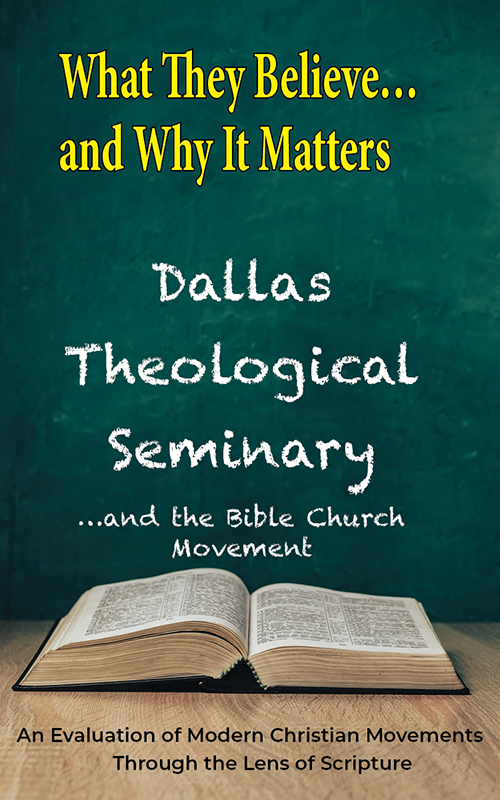
Dallas Theological Seminary: Evaluated How does DTS shape modern evangelical theology—especially in Bible churches—and what do its words actually teach? This blunt, text-centered critique puts Dallas Theological Seminary’s doctrinal statement under the lens of Scripture, offering clear analysis of its strengths, omissions, and internal contradictions—and why that matters for churches led by DTS graduates. This booklet examines: Why DTS belongs in this series: its outsized influence in Bible churches and parachurch ministries, and how a seminary’s doctrine often becomes a congregation’s doctrine. A word about doctrinal statements: the “necessary evil” problem—how brevity forces vagueness, seeds contradictions, and should never be treated as the savior of orthodoxy. Article I — The Scriptures: inspiration without preservation, an imposed Christ-centered hermeneutic that undercuts literal interpretation, and fuzzy canon language. Article IV — Humanity: image of God retained vs. Reformed loss-of-image implications; the misstep of calling marriage/singleness “callings”; and total depravity phrasing that smuggles in Calvinistic soteriology. Article V — The Dispensations: “manifest in the biblical record” yet boundary markers are missing; non-intermingling asserted but blurred in practice; “always by grace through faith” language that empties dispensational distinctives. Article XIII — The Church: universal-church emphasis that sidelines the local assembly—the very ekklesia Scripture describes—and an ecumenical “rise above all sectarian differences” demand that guts doctrinal conviction. Article XIV — Sacraments/Ordinances: conflating terms that don’t mean the same thing, and the logical consequence of DTS’s universal ecclesiology—free-floating baptism and Lord’s Supper detached from a gathered body. Article XVII — The Great Commission: putting the church before Pentecost, ignoring the full content of “teach them to observe all things,” and confusing kingdom instructions with the present dispensation. Article XVIII — The Blessed Hope: commendable pre-trib direction yet weakened by using John 14 and 1 Cor 15; the case stands strongest on Pauline revelation (1 Thess 4:13–18). Article XXI — The Eternal State: calling the intermediate state the eternal state, overlooking Old Testament saints and Israel’s resurrection—glaring omissions in a dispensational statement. What you’ll gain: A practical guide for evaluating churches pastored by DTS graduates without surrendering your convictions to a school’s shorthand. Concrete tests to “rightly divide” claims about Scripture, the church, salvation, ordinances, mission, and future things. Confidence to treat doctrinal statements as limited summaries—not as the measure of truth. The only sure standard is the Word of God, faithfully translated, rightly divided, and literally interpreted. This booklet is published in black and white to keep costs low and access high. Ideal for pastors, elders, Bible teachers, students, and laymen—especially in Bible churches—who want to compare DTS’s claims with the clear teaching of Scripture itself. Order your copy today and join the call for theological clarity, doctrinal honesty, and biblical precision. This booklet is printed in an affordable black-and-white format as a ministry resource.
Booklet: Dallas Theological Seminary Evaluated — Examine DTS’s doctrinal statement, influence, strengths, and glaring weaknesses. Clear, biblical analysis for pastors, teachers, and laymen. Request your copy today.