
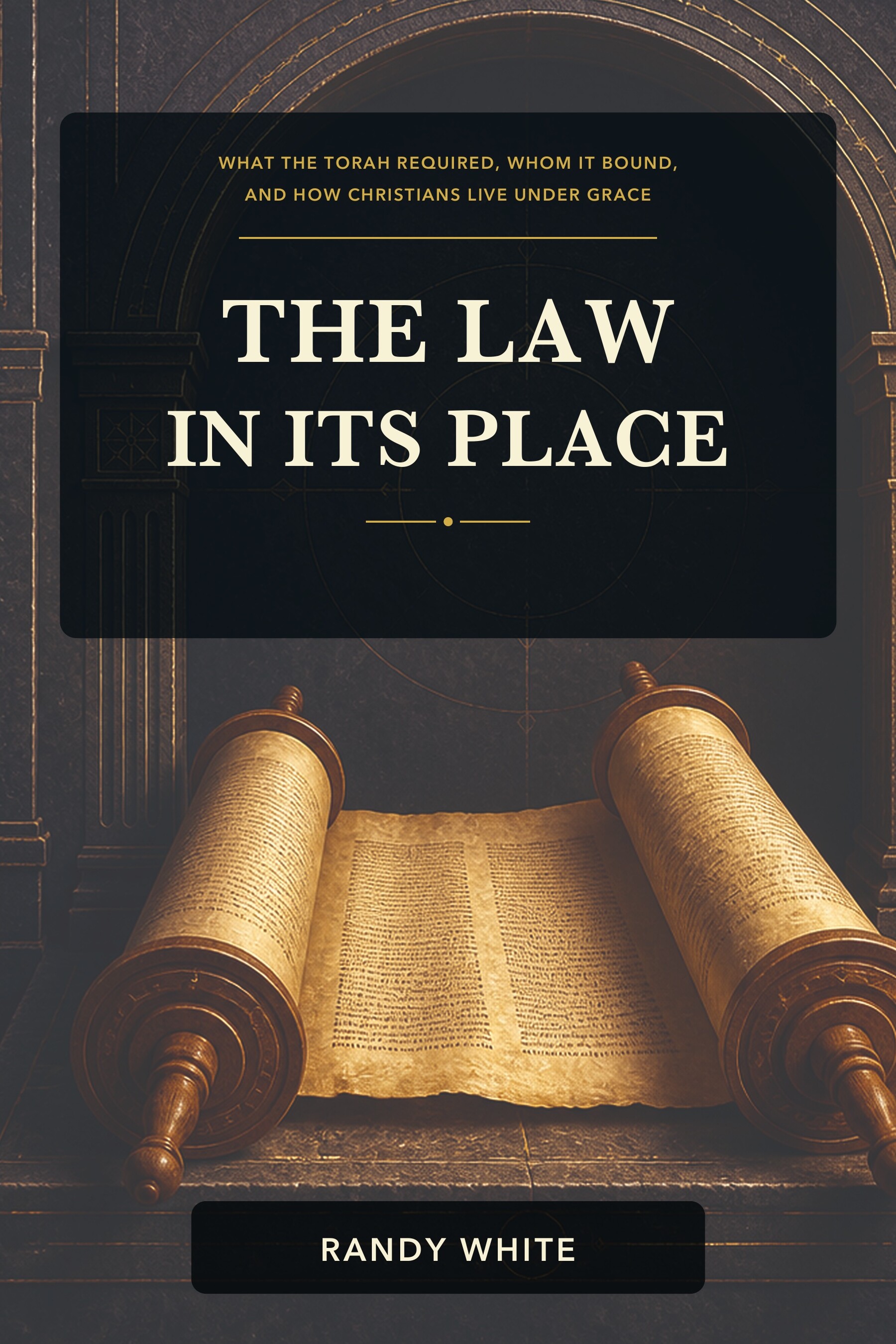
Description
About this resource
Was the Mosaic law an impossible standard given chiefly to prove human failure? In The Law in Its Place, Randy White challenges that familiar claim by taking the Torah on its own terms. He presents it as a real, workable covenant given to Israel - complete with commandments, institutions, priesthood, sacrifices, courts, blessings, and judgments suited to the nation's covenant life.
White carefully considers the Torah's structure and jurisdiction. Its commands were distributed according to office and circumstance: priests, kings, men, women, landowners, and others did not all bear the same responsibilities. The book explains why no individual Israelite was expected to perform every command later gathered into a list of 613 and why sacrifices and courts were integral provisions within the covenant rather than evidence that it could not function.
The discussion then turns to Jesus and Paul. Jesus was born under the law and ministered within Israel's covenantal setting, while Paul's later revelation addresses the Body of Christ in the present dispensation of grace. Preserving that distinction allows Jesus to uphold the law without being corrected by Paul and allows Paul to proclaim righteousness apart from the law without treating Moses as a failure.
The final chapters address modern Torah-observance arguments and ask positively how Christians should live when the Mosaic covenant is not their covenant. White argues that believers should study and respect the Torah without placing themselves under its jurisdiction. Grace does not leave the believer without instruction; it provides a new identity, new resources, and commands suited to the believer's calling in Christ.
This 6 x 9 paperback contains 102 print pages and uses the King James Version throughout.