
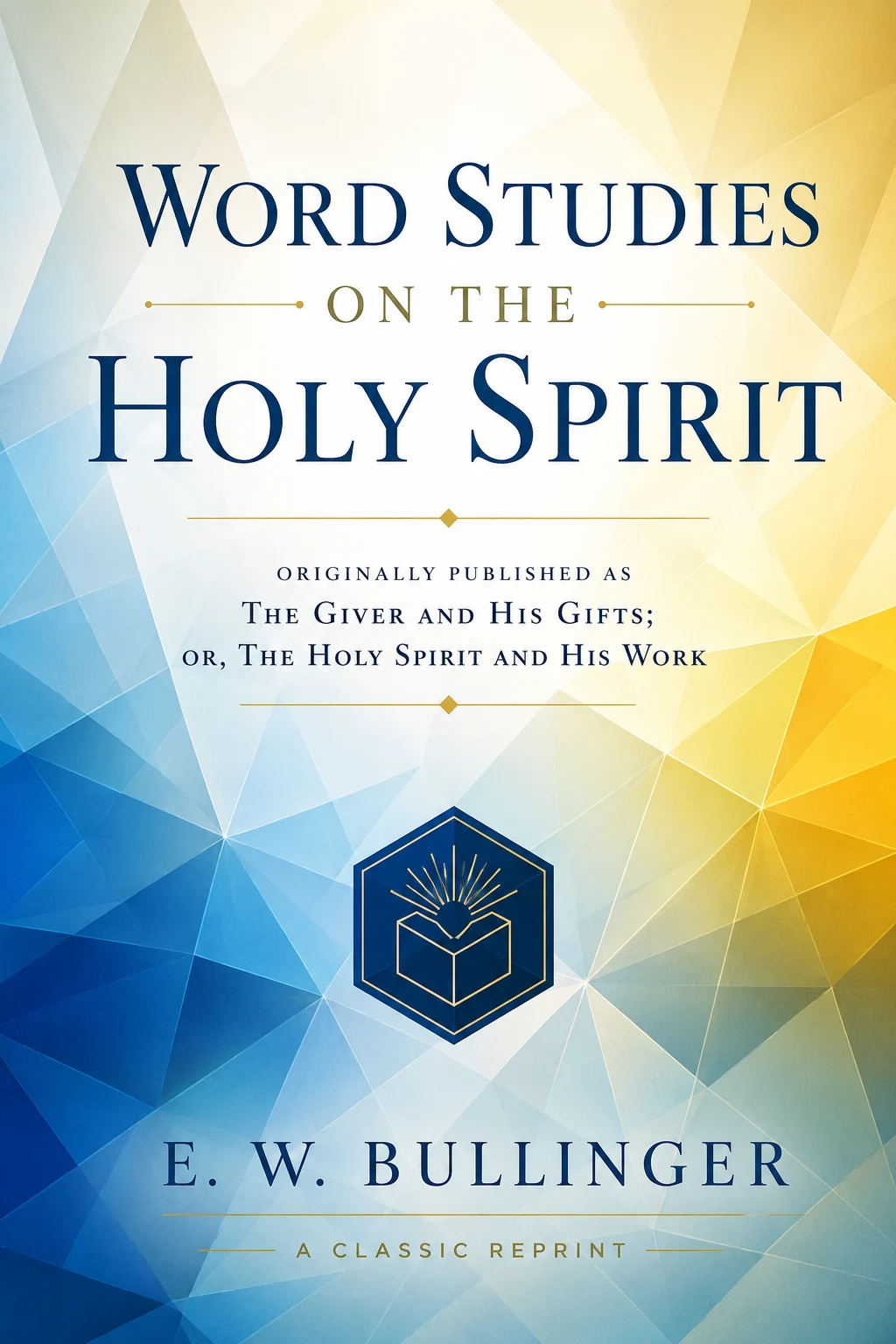
Description
About this resource
What does "spirit" mean in each New Testament passage? The Greek word pneuma appears hundreds of times, but it does not carry precisely the same sense in every context. It may refer to the Holy Spirit, His gifts or operations, the human spirit, a disposition or attitude, an angelic being, or another spiritual reality. English capitalization can make these passages appear simpler than they are, even though a capital or lowercase letter often reflects an editor's interpretation rather than information supplied by the earliest Greek manuscripts.
In Word Studies on the Holy Spirit, E. W. Bullinger undertakes a systematic investigation of this important biblical word. He distinguishes between the use of pneuma—the grammatical forms and constructions in which it occurs—and its usage—the meaning it carries in a particular context. He then proceeds through the New Testament from Matthew to Revelation, examining individual references and explaining the distinctions he believes the text requires.
Originally published in 1905 as The Giver and His Gifts; or, The Holy Spirit and His Work, this classic reflects Bullinger's characteristic attention to vocabulary, grammar, context, and biblical structure. Readers may not agree with every conclusion, but they will encounter a serious effort to let the wording and context of Scripture govern interpretation.
This restored 150-page edition includes a study of capitalization and editorial interpretation in Greek texts and English Bibles; an explanation of the principal grammatical forms in which pneuma occurs; a classification of the word's distinct New Testament usages; a passage-by-passage examination from Matthew through Revelation; discussion of pneuma hagion and related expressions; and comprehensive classified lists and reference appendices.
Word Studies on the Holy Spirit is especially useful for pastors, teachers, Bible-study leaders, students of New Testament Greek, readers interested in the person and work of the Holy Spirit, and anyone building a serious biblical-reference library.
E. W. Bullinger (1837–1913) was an Anglican clergyman, biblical scholar, and prolific author. He is especially remembered for his close attention to biblical vocabulary, literary structure, and figures of speech. His reference works have remained influential among generations of careful Bible students.